Medication Assisted Treatment
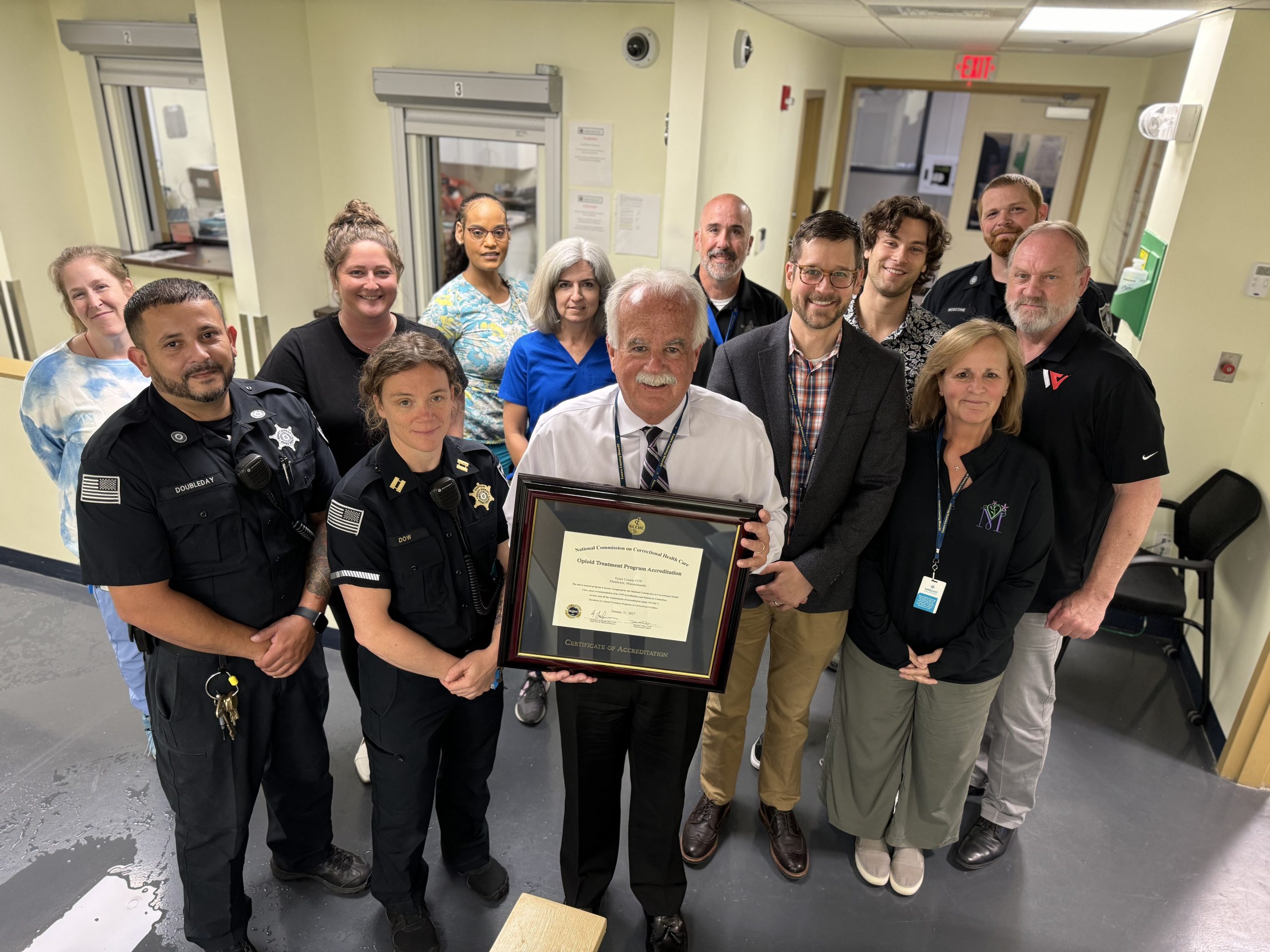
The Essex County Sheriff’s Department has emerged as a national leader in addressing the opioid crisis through its innovative Medication Assisted Treatment (MAT) program. What began with a court ruling in 2018 has developed into a comprehensive system of care aimed not just at treating addiction, but at preventing relapse and reducing recidivism.
A Program Born in Crisis, Built on Evidence
Following a federal court order in 2018 requiring access to methadone treatment, Sheriff Kevin Coppinger didn’t simply comply — he innovated. By 2020, the Middleton House of Correction opened a full-scale MAT Center with a DEA-compliant dispensary and clinical services, offering methadone, Suboxone, and Vivitrol to incarcerated individuals.
Key highlights:
- The MAT program serves over 180 people daily at Middleton.
- Services have expanded to include participants at The Farm (Correctional Alternative Center in Lawrence) and women at the Women in Transition facility.
- The program integrates medications with counseling, individual treatment planning, and overdose prevention services, including distributing naloxone upon release.
Meeting People Where They Are
Essex County’s MAT approach follows best practices, combining:
- Medication management
- Group and individual counseling
- Overdose prevention education
- Supportive discharge planning and community resource referrals
Research consistently shows that MAT reduces opioid use, disease transmission, overdose deaths, and criminal behavior, while improving employment and treatment retention outcomes.
A Community Continuum of Care
In 2021, the department launched the Essex Medication Re‑entry Grant Expansion (EMRGE), funded by a $2.6 million SAMHSA grant in partnership with Volunteers of America Massachusetts.
This expansion provides:
- Services to nearly 1,000 individuals over five years
- Seamless transition from in-custody care to post-release case management
- Connections to mental health treatment, vocational support, and housing assistance
Recognized as a Model for Reform
Essex County’s MAT program has been praised nationally as a strong model for correctional health care reform. Sheriff Coppinger’s leadership has positioned the department at the forefront of correctional-based addiction treatment, demonstrating how jails can play a critical role in combating the opioid crisis.