


By Deyscha Smith/The Daily Item of Lynn
March 22, 2026
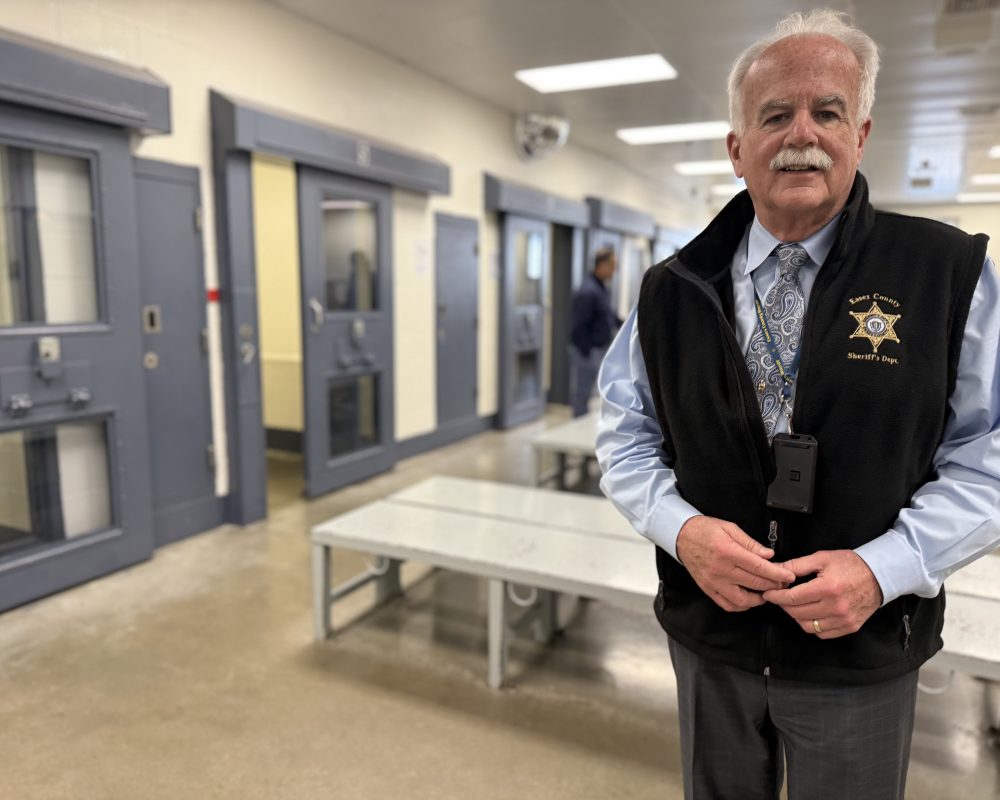
LYNN — When Kevin F. Coppinger arrived at the Essex County Corrections, located in Middleton, as the newly-appointed sheriff in January of 2017, he brought with him a vision of how to approach not only the job, but what happens within the facility itself.
At the time, the inmate population was “just shy of” 1,500 inmates, but over the years, they’ve seen a dramatic drop in the population, including this past February, when the number was down to 890 inmates. The improvement is a result of the successful approach and environment they’ve created inside the facility, where inmates aren’t just serving time; they’re being given an opportunity to reform.
“I’ve been there nine years, believe it or not, and we’ve slowly changed the culture of the jail,” Coppinger told The Daily Item. “You’ve got to have a different idea, (and) you’ve got to have a different perspective of what you’re doing with these folks.”
Prior to becoming sheriff, Coppinger had spent decades with the Lynn Police Department, where he served as a police officer for 33 years and then climbed the ranks to public information officer and lieutenant before being appointed as chief.
When he became sheriff, Coppinger said that they really pushed for “safe keeps,” which is a process where Essex County Corrections will take in and house those who are not eligible for bail and provide them with services, including showers, three meals a day, and an infirmary with 24/7 medical attention before bringing them to court the very next day.
“We take the pressure off the local police and bring (the inmates) to the jail,” he explained.
Inside the guarded doors of the facility, the inmate living spaces are clean and well-maintained. This level of care extends beyond the dining area to every area the inmates occupy, all of which are kept spotless. The library is well-organized and fully stocked with legal books and resources, providing meaningful support for those who use it. The classrooms, where inmates have the opportunity to take college courses, are modern and well-equipped, comparable to, and in some cases even nicer than, those found on many college campuses.
Inmates also have access to mental health experts and clinicians, as well as social workers. Essex contracts a company called Spectrum Health Services, which provides classes and educational programming for those suffering from addiction and substance abuse.
Programming offered through the Supporting Transitions and Reentry program (STAR) provides them with education and an opportunity to earn their high school equivalency degree. They also offer classes taught by professors at Northern Essex Community College to prep for HiSET.
There are also parenting programs and career-training in a number of fields, including barbershop, the culinary arts, and a new plumbing program which will award inmates with a certificate that they can then show to potential employers. In their graphics print shop, inmates learn about the craft and actually print both cards as well as the paper-version of last year’s annual report.
They have also partnered with the New England Concrete Manufacturers Association to teach the inmates masonry, landscape, and how to build walls, fountains, and walkways.
In Lawrence, there is a working farm where they can grow and harvest 32,000 pounds of produce a year, which is used to feed the inmates but also gets donated to soup kitchens around the county, including My Brother’s Table. During pumpkin season in the fall, they end up growing thousands of pumpkins, which also get donated to nonprofits, schools, charities, and nursing homes.
The Women in Transition Center in Salisbury is a minimum security and pre-release facility dedicated entirely to women, specifically those struggling with drug and alcohol addiction. It offers both housing and transportation to the job opportunities, as well as the chance to fund an account that they can then access upon release.
“The theory is: We bank the money for them, and then when they get the check, they can get an apartment — first month, last month’s rent, or need a car payment, whatever they need. But it goes back to them. But they’re also learning, like, ‘OK, I’m back in the workforce. I’m working, and I know if I mess up here, this is not going to bode well before getting out of jail,’” Coppinger said.
By providing those who are incarcerated with the skills, opportunities to achieve, and an overall environment that fosters what life is like outside of its facility, they’ve been able to have a major impact and even lower the chances of them returning.
“This is a proud moment. I’m not going to lie to you. We are judged by recidivism — which means that if somebody leaves, do they come back to jail?” Coppinger said before going through the real-time statistics, which include Essex County having the lowest on-year incarceration rate in the state at 13.3% per the CMI model.
“The recidivism rates are excellent,” he continued. “But, you know, I gotta give credit to credit to the wonderful staff and the vendors that work with us because that’s where it’s happening. They do all the hard work.”
His words reflect the type of sheriff, and leader, Coppinger is — the type to quickly highlight the hard work of others, from his staff to even the inmates themselves, telling stories of their successes and what it’s like for him to see them not get lost in the system. At one point, Coppinger recalled the 1992 film “A League of Their Own” and compared the feeling of Tom Hanks’s character Jimmy Dugan’s iconic line, “there’s no crying in baseball,” to what it’s like working in corrections.
Except, just as Dugan, Coppinger truly cares a great deal. His experiences has led him to truly understand that everyone working together — from himself to his staff, local police forces across the county, and the very communities and people who reside within them — is the true way to make a positive impact. Numbers aside, the proof is in the very inmates who he’s seen walking at their graduations, holding jobs, and returning back to life outside of their white walls.
“We can’t take credit for all of it. Well, we will take credit for some of it, but a lot of it goes into police resources, into the old community policing philosophy, get out ahead of the problem, engage the community, find activities,” he said. “Try to engage the kids and get them a different philosophy (and) a different way of looking at how life evolves.”