


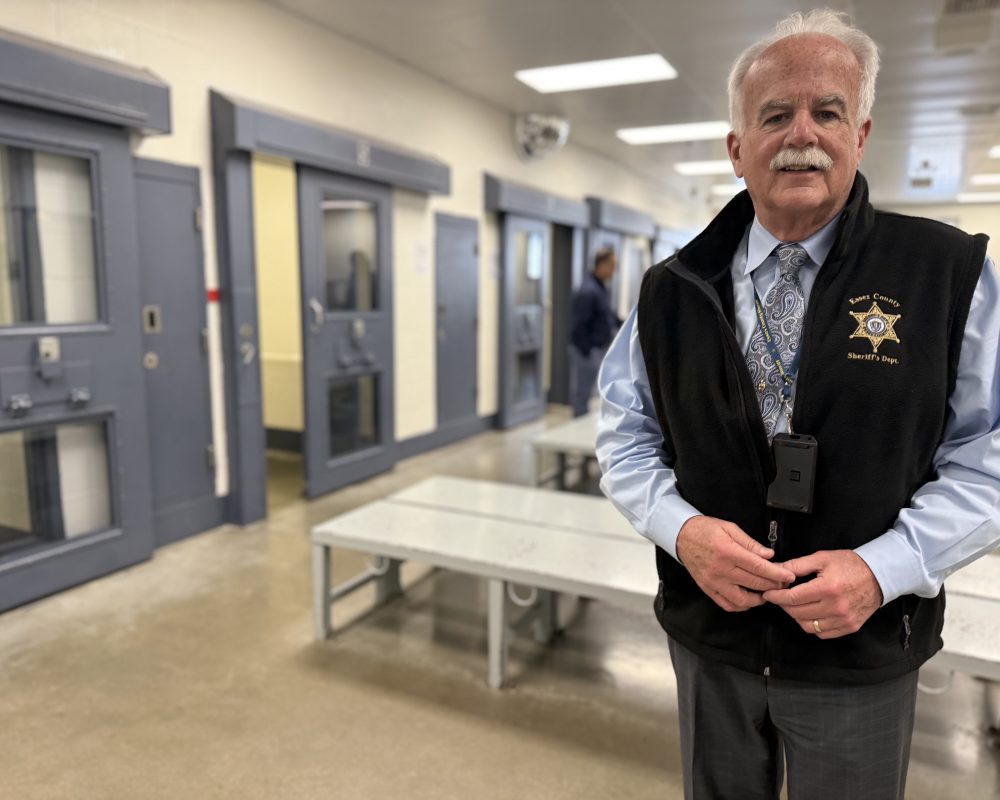
By Essex County Sheriff Kevin Coppinger
As appeared in the October 2026 Valley Patriot
There are many reasons why Essex County has the lowest one-year recidivism rate among Massachusetts sheriff’s departments.
But perhaps the most important is partnership.
Law enforcement, the courts, probation, treatment providers and community organizations all have different roles to play, but we share a common goal: When someone enters the criminal justice system, we want that person to eventually return to the community with the tools, treatment and support needed to succeed and not come back.
At the Essex County Sheriff’s Department, we offer dozens of programs to the men and women in our custody. As I sometimes say, a little tongue-in-cheek, we have a captive audience, so let’s program the hell out of them while they are here.
But the more serious question is: What happens when they leave? Someone can make tremendous progress while incarcerated, but if that person walks out the door without treatment, housing, medication, employment opportunities or someone to turn to when things get difficult, that progress can quickly disappear.
That is where our Specialized Re-Entry Services team comes in.
These dedicated men and women work with individuals from the time they enter our custody through their return to the community, identifying the challenges that brought them into the criminal justice system and developing a plan to address them.
Think about it this way. If you break your ankle, your first stop might be an emergency room or urgent care center. But the treatment does not end when you walk out the door. A plan is developed. You may need to see your primary care doctor, an orthopedic specialist or a physical therapist. There are follow-up appointments and steps you need to take to heal properly.
Re-entry should be approached with that same mindset.
When someone comes into our custody, we look at educational, employment and family history, but we also take a deeper look at what contributed to that person becoming involved in the criminal justice system. Very often, substance use disorders, mental health challenges — or both — are significant factors.
Our job is to address those issues rather than simply wait for a sentence to end.
Working closely with judges, probation officers, attorneys and treatment providers, our Specialized Re-Entry Services team develops options that provide accountability while connecting individuals with the treatment and support they need.
One option is our Clean and Sober Existence, or CASE, program, a structured 28-day program for individuals struggling with addiction. Treatment begins inside our facility, but the planning does not stop there. We work to connect participants with community services, outpatient treatment, probation requirements and, when appropriate, sober housing.
Our Medication Assisted Treatment (MAT) program addresses opioid use disorder with evidence-based medication, counseling and individualized treatment planning. Our program has become a nationally recognized model in correctional health care, providing medication and clinical support inside our facilities while helping individuals continue treatment after release.
For those struggling with mental health challenges, our Correctional Opportunity for Personal Enrichment (COPE) unit provides a specialized environment with embedded clinicians, case management and individualized re-entry planning. Participants receive mental health support while also preparing for the realities they will face when they return home.
Our Correctional Alternatives for Re-Entry, or CARE, program provides another pathway for pre-trial individuals. Working with the courts, probation and other partners, CARE helps develop individualized plans that can connect participants with community-based treatment and other services as an alternative to continued incarceration when approved by the court.
And then there is STAR — Supporting Transitions and Reentry — our community-based program with centers in Lawrence and Lynn.
STAR is an important piece of this entire system because it allows the work that begins inside our facilities to continue outside them. Participants can receive help with substance use and mental health treatment, education, employment, housing, identification and other challenges that can become major obstacles for someone trying to rebuild a life.
Our STAR team also works with more than 200 community organizations, giving participants access to an extraordinary network of resources.
All of these programs are different, but they are built around the same philosophy: Re-entry starts on Day One.
We cannot expect incarceration alone to solve the problems that brought someone into the criminal justice system. Nor can we provide treatment for weeks or months, open the door on release day and simply wish someone good luck.
Just as we would never treat a serious injury halfway and call the patient healed, we cannot address addiction, mental illness or the other challenges contributing to criminal behavior halfway and expect lasting results.
Successful re-entry requires a plan. It requires accountability. It requires treatment. And, most importantly, it requires people and organizations willing to work together.
That is what our partnerships with the courts, probation, law enforcement, treatment providers and community organizations allow us to do every day.
When someone leaves our custody and does not return, that is more than a successful statistic. It means a person has another chance to become a productive member of the community. It means a family may be reunited. It means fewer victims and less crime.
And ultimately, that is what public safety is all about.
Kevin F. Coppinger is the Sheriff of Essex County and a former Lynn Police Chief with more than four decades in law enforcement. He oversees the Middleton Jail and House of Correction, the Essex County Pre-release and Re-entry Center in Lawrence, and the Women in Transition facility in Salisbury.